Friday, July 12, 2013

Basement/Penthouse

If you were looking at your self image in a mirror and the way you saw yourself where would you reside?
Are you in the basement or in the penthouse of your life?
The basement is a cold dark place that allows little light to shines through. It's not welcoming and has dirty corners in which small critters find comfort. It’s true you can renovate it and fix it up to look comfortable but it'll remain the basement no matter what you do. A penthouse on the other hand is the opposite. It's filled with light; usually well maintained and stands above everything else. It has a shine on it and it's lifted. It most often represents attainment.

So I ask the question again, where do you live?

If I asked myself that question in my twenties I would have told you the basement. Back then living with this virus I felt dirty. I had no light in my life as I was trying to keep my head up from swimming in a pool of misplaced values and a sense of belonging nowhere.

I didn't give myself the gift of nurturing. My basement was filled with clutter of boxes stored with past pain of child abuse and low identity of self. I had picture frames of a smiling child that masked confusion on what lied inside of me and why did they call it gay. My older photographs were similar in pose only now the confusion was unable to comprehend this thing they called HIV.

It was a basement that I first received my gift. A questioning boy walking into the adult arms of a person who showered me with words I only heard said out loud to puppies. Words like 'cute', 'adorable', 'precious' and 'love'. It was in the dark of the basement light these words were whispered to me; even the red light bulb hanging from the wall knew it was a lie. But when you grow up not being affirmed or having value placed on you, you take whatever water that will help you bloom even if it's the leftover sludge from the bottom of the bucket.

I believe we were all born with wings to fly us up to higher lofts, but in my circumstance I was a child with clipped wings. Wings that were once full bloom now tarred with insecurities, self doubt and shame. "if you ever grow up to be a faggot I'll kill you" were the lessons I learned, lessons from home, from peers and deeply rooted in my community.

My true self was hidden in mason jars sealed with duct tape, hidden among the spiders on dusty shelves in the basement.

My saving grace was the cracked mirror where I came face to face with my reality. It was hard to see my reflection especially with my eyes closed. But I found the strength to clear the dust of doubt and reveal in my true persona. In the musty air I whispered to my reflection.

I am beautiful

In those words I saw a stripping

The physical action of saying it lifted my eyes to the possibilities of the words that have escaped my lips. Saying I was beautiful gave me a key to unlock my own potential instead of waiting for someone else to open the door to affirmation. I was refreshed in new waters yet to be tainted as I repeated this mantra of beauty to myself. I initially half heartily bought into the fantasy of the word beauty and my self mentioned in the same breath, yet I knew to find the way up out of my misery I had to believe, simply believe that despite my circumstances and disadvantages that I truly was
Beautiful
My reflection of self embraces it as I see the person I want to be.
Happy.

I start to see steps. Steps leading up. Ones I need to take to see the true light of my possibilities. They look daunting to climb but my will was stronger. Each step is victory as my bare feet moves forward, no longer dwelling in past mistakes.

I step forward out of low sense of self

I step forward out of stigma relating to my HIV status

I step forward out of harmful behaviors that uproot me from my growth

I rediscover me even in those moments of missteps that take me down a step and with the strong will of God finding direction to not have any set-back be a step back

But a step forward only wiser of past mistakes

My beauty takes me from my basement moments and moves me to an upgrade in my dwelling

To my true home, the penthouse

From here I can see all my possibilities

I can bear witness to my dreams looking out unlimited windows

And my true light shines, a gift from God.

Here I spread my wings
Regrown from my investment in self

This is where my life is supposed to be.
This is where I call home.
How about you?
Where do you live?
In the basement or the penthouse?


Friday, July 5, 2013

Condom Conversation

When it comes to HIV many should be aware that an effective tool to prevent exposure is using a condom.  In fact there are those who feel that there’s no excuse for someone to get HIV today especially with all the information out there and the vast availability of condoms whether free or by purchase. Yet what if a condom isn't simply a condom? What if the condom has more of a symbolic meaning, a subtext to one’s relationship that doesn't make it so easy as to strap one on before sex? What if it represents an unspoken communication in your rapport with someone else that raises other issues besides HIV? How do you have a conversation about introducing a condom when you’re having the discussion with someone mid-stream that you've been in a long-term relationship with and not a one night stand?
When looking at HIV prevention posters there seems to have one thing in common. The message seems to be directed to those who are not in a serious relationship and may have multiple partners. One message that is not effectively communicated are HIV campaigns that address those who are in a committed relationship. The feeling may be if one is in a relationship then there has to be an expectation that both couples are monogamous yet there are many statistics that shows that infidelity remains one of the big problems in any relationship, whether t’s same sex or opposite sex couples. Focusing on LGBT couples statistics on infidelity among same sex couples show an unusually high rate of infidelity among lesbians and gays. One study of male homosexuality found that few homosexual relationships last longer than two years. Data from the Gay/Lesbian Consumer Online Census shows that only 29% of gay/lesbian relationships last more than 7 years. In forming this relationship one may feel that since being in a committed relationship there is no need for a condom.
I personally knew of such a couple. They had been together for eight years. One had started to communicate that they had suspicions that the other person was cheating but didn't know how to approach it. There was even a case where they had an STD scare but later found out it was a simple cold sore. Yet that fear alone didn't give my friend the strength to not only talk about his suspicions but to also talk about start using a condom. So it became a waiting game until finally the partner was caught cheating and during that time my friend didn't know if his ex was using protection with the other person and if not was possibly exposing my friend to any STD. My friend also didn't bring up the condom conversation as he fell into an old belief that acknowledge their partner may be having sex with someone else, which was only sex , but they are the one they love.  
To introduce a condom in an established relationship is difficult. One partner in a relationship may feel different and may want to start using a condom for many reasons, yet by doing so the condom takes on a new meaning. It’s no longer simply about prevention, but the introduction by the other half of the partnership may view the condom as a lack of trust.  Perhaps the other person may feel their partner is not being monogamous and want to protect themselves against other HIV/STD. In the book Sex in America: A Definitive Survey, by authors Michael, Gagnon, Laumann, and Kolata they found that they may also fall into another statistical fact that gay couples who remained together past the 10 year mark were able to do so only by accepting the painful reality of infidelity in their relationship. In this unspoken knowledge a partner through the acceptance of the fact my still not bring up the issue of using a condom and may feel that whether their partner cheats that they trust their partner enough to not be exposed to HIV or any other STD.
There may also be an acceptance based on another aspect of the relationship that makes discussing condom usage difficult. That is one of power dynamics within the relationship itself.  One power can be focused on the one who is considered the major bread winner or supporter of the household. In some unions it’s equal/equal but in some relationships one person may have an advantage over the other as they may take care of most of the major expense which can include housing, bills and living expenses. This unequal equity balance may make feel they have little leverage to introduce a condom into their relationship.  And that by doing so will create a possible situation where by doing so will create an environment where the financial aspect is restricted or removed all together.
Another power dynamic can be an inter-generation one where one person is many years older than someone they are in a relationship with. The younger may not discuss it as they feel that the older person, in their maturity, will protect them from harm and may see the older as having most of the power in the relationship. The issue of trust also replays itself and the younger may feel that they are no longer desired and to raise such an issue shows their immaturity.  Especially for those who are new to their sexual knowledge and experience they may leave the decision of whether to use a condom to the older partner who they feel have more experience.  
As HIV changes the approach to it also has to change.  A more recent study on the rate of infidelity among lesbians and gays done by Alliant International University in San Francisco found that the number of gay men in committed relationships who engaged in infidelity has dropped in recent years. This is a chance for prevention methods to start including couples, especially long term couplings, in the discussion of HIV.
Introducing a condom in a relationship can be difficult to approach but the conversation has to start from someone especially if you’re the one in the position with doubts of fidelity. In those cases it’s not simply about HIV or other STD’s but one about the state of your relationship in general. Empowerment is the key and in that power recognizing that even in a coupled situation you still have to make decision as an individual especially when it affects your health. Not having that talk is a realization that by placing your head in the sand you may place yourself in a position where the relationship may be over but your life with an STD especially HIV is just beginning.

Thursday, June 27, 2013

Harlem Pride

Harlem Pride
With the recent overturn of DOMA and Proposition 8 Americans especially the LGBT community has a lot to celebrate. The extra bonus is that this is Pride weekend and for those in Harlem they don’t have to go far to celebrate as Harlem Pride is this weekend, June 28th-30th at venues around the city and Harlem. From a launch party to a festive gathering there are many choices to choose from and it’s in many backyards.
Being a Harlemite I can say there used to be a time when you wanted to show your gay pride you had to travel to other boroughs or make a trip downtown. Started in 2010 Harlem Pride has filled a need that was sorely lacking uptown.  The fact that over 3,000 people attended events thrown by the group shows the need and the achievement of the group as well as showing the growing community of the LGBT community in Harlem. I know for myself I have seen the changes in the last few years. It used to be that Harlem was never like Chelsea where you saw openly LGBT express themselves. In Harlem at the time it was a silent code where your Gaydar worked overtime for find others like you. Honestly for me I felt that it was still a stigma to be gay and not full accepted in the community I called home.

Now there has been a shift and a wave of acceptance has followed and Harlem Pride continues to be a reflection of that change. The great thing about Harlem Pride is that it’s not for just one community. In other words it’s not just for blacks, Latinos, gay or those who reside in the Harlem zip codes, it’s for everyone. This is seen by the crowds who have attended, and like the diverse place of Harlem you also witness it at their big gathering. And no knock to the huge Pride that happens downtown but Harlem Pride is ideal for families as it’s held in a spacious park, Jackie Robinson Park, which has additional facilities for families to enjoy.

I went last year and loved seeing the reflection of the colorful rainbow. Like other Prides there’s health booths and agency/business information but what’s different is the energy. Okay I’ll say it, it has flayva! As I walked around last year you couldn’t help to be drawn in by the music and the rhythm of the day.  But Harlem Pride is not just for one day as according to their 2013 schedule they kick off events at the Aloft Harlem, the newest hotel to land in Harlem. This is a VIP Launch Party with special guest performers and local celebrities in attendance.  For those who may have plans for the weekend and unable to attend the Saturday event in the park this can be a great alternative.  Tickets for the VIP launch party are $50 dollars and include food and drinks plus you can’t beat the fact they will have an auction, free give ways and a raffle!  The Pride celebration in the park is free for all to attend.

But I know I’m sounding like a walking billboard and need to explain the reason for my excitement. In past Pride celebrations, people of color have sometimes been an afterthought and often not fully included in the planning process or the day itself. It was like we were welcomed to hang out on the fringe but not welcomed to eat at the big table. This was the reason many Black prides were created to bring about that visibility. Yet one can look at those organizations and although understand the need for a separate entity, it still creates segregation in the community.  So knowing that, Harlem Pride takes into account the histories of Pride and creates a unified event for all which is a great thing.

My second reason for wishing them success is that I once was on the organizing committee for a black pride event in Minnesota called Soul Essence. I can tell you that it’s hard work that people don’t fully recognize. It was great as we were successful in having events that were well attended and with no or low entry fee. We created a weekend of events with no funding and the only monies came from donations and our own pockets. The people in attendance had no idea what we had to endure to make the events happen. Behind the scenes we ran all over the city to get supplies, rushed to make press deadlines, scurried to collect funds to pay for permits all while trying to manage our full time job and our home lives.

 It’s this hard work that I’m sure the members of Harlem Pride can relate to. I’ll even go as far as to speak for them when I say that for us it was the passion of creating something for the community by the community, reflecting the community that drove us. We were lucky in that we didn’t have people to sit on our board simply to sit on our board and make decisions. Everyone involved from the board members to the volunteers rolled up their sleeve, reached in their pockets and did whatever they needed to do to make the Pride a success.  This energy is reflected as they hold events all through the year and not just in the month of June.


It takes community to make Pride happen and the celebrations this weekend are reflective of that. So please show your support and your Pride especially if you live in Harlem. For more information go to https://harlempride.org/.  Let’s come together and make music with our spirit as we celebrate recent victories in our ‘hood. So taking a new phrase, It’s not WeHa, it’s not SoHa, it’s Harlem Pride. See ya there!

Thursday, June 20, 2013

Prescription Against Stigma

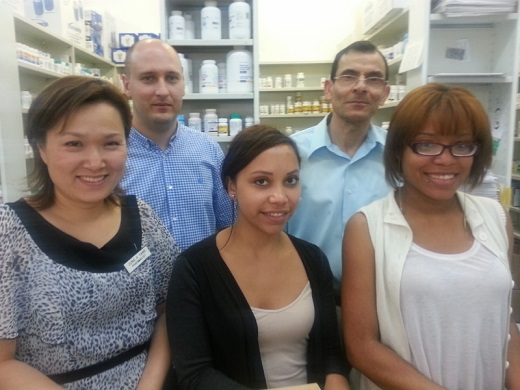
“When are you going to write about us”, a comment that was made to me recently and repeatedly from the pharmacy where I obtain my HIV medication. It was a good question as I’ve been receiving my prescriptions from them for a while and looking back over those years I realize the people at Sugerhill Pharmacy in Harlem has been more than pill dispensers but have been great allies to not only helping me with my health but also much needed assistance.  When thinking of who’s in you corner when it comes to your health, the top answer is often your doctor and the nurses that provide care. Your pharmacist may not rank as high but for others like me its right up there as being an invaluable part of my support system in my life living with HIV.

Initially when I needed a place to go for my medication I was reluctant to go to my current pharmacy. I felt there were two good reasons for me not to get my HIV prescription filled there. One was the fact that it was in my neighborhood. I was once in the mindset that all my service for my status would be done out of my neighborhood for fear someone I know would ask questions. The sad part about receiving services for your HIV is that because of the stigma associated with it, others like me at the time follow this practice. A great care center may be only blocks away but individuals may choose to travel miles away because of the stigma. The second reason for my hesitancy was that because the pharmacy was small and not part of a large chain, it would have more of a family feel and I believed that my health status wouldn't be welcomed in that particular family. In a way I preferred the cold dispensing of my medication from a huge chain that didn't care that there was a person behind that pill.

Looking back I remember the fear I had about handing over my prescription that had my doctor’s scribble for HIV medication. I think the feeling came from previous pharmacies I've been to where the pharmacist looks at the paper and then looks at you over his reading glasses. A look that says, “You’re one of them”. Even at that moment the person at the register has power as sometimes they’re not skilled in their tact as they state out loud how you’re supposed to take you medication or store it. So starting my new relationship with Sugerhill made me hope it wasn't going to be a bad experience.

I have to say Dave Khantses and his crew eased all my fears by informing me he knew my doctor and he has a great relationship with him based on others who medications he filled. It was a relief as you knew right away this was going to be a ‘safe’ place and one of understanding. You can say I was fortunate as since then he has help schooled me on options that were available to me as someone living with HIV. Dave was the one who informed me about ADAP (AIDS Drug Assistance Program). This came after having a casual discussion with him of how expensive it was, even with my co-pay, to purchase my prescriptions. Despite having health insurance, because of my regimen the co-pays of my medications were easily close to a hundred dollars a month. That’s excluding any other ailments that would require me to get a prescription such as antibiotics. I’m not alone is this aspect as I know of a friend who simply didn't get a prescription filled as he couldn’t afford all the co-pays. Luckily Dave helped me through the process as I never had a case manager and in the end it made it easier on my wallet.

I even thank the pharmacy for helping me find my current doctor. My regular doctor had decided to leave his position leaving me to find another care provider. Starting any relationship is difficult including finding a new doctor. It was a relief when Dave, again knowing many HIV doctors based on conversations with his customer, directed me to the one I’m currently with. This type of assistance is a long way from some of the previous bad experiences I have received from larger pharmacies, especially chains. Of course not all chain pharmacies are bad but in my experience I often felt like a number instead of the ‘family’.

I think the value of a good pharmacy can be underestimated.  I say this especially for those who are just starting a HIV regimen. The one thing a person doesn't want to do is not get their scripts filled based on perceived or real stigma. I think even for us long-termers it’s a good reminder that a great pharmacy can be a place for resources and referrals. And if you’re a person like me who doesn't need a case manager it helps. Pharmacists speak every day to doctors throughout the city and can get a good sense on the good ones versus those who don’t have the best follow through. Like the folks at Sugerhill they can also provide information on programs or assistance that your doctor may not even be aware. Of course I say this to not have your pharmacist replace your doctor but together they make a great team. Yet ironically it was the pharmacy that informed me I could switch to a single pill for one of my medication instead of taking two a day. For me it’s an understanding that doctors can be overwhelmed and those little pieces of information can slip by but it’s nice to have someone else informing me.


So thank you Dave, Helselenne and Jung for welcoming me into the family and helping me with my care. On many occasions you've went the extra mile and always did it with a smile. My two dogs even feel welcomed when I bring them in! It’s the simple things that make a positive impact and I just know for the newly diagnosed walking into your store for the first time with a prescription in their hand, they’re going to be well taken care of. But of course if they had asked me I would have told them they were in good hands. See you guys next month!

Wednesday, June 5, 2013

Black Shame and HIV

Black Shame and HIV
When I was diagnosed with HIV the one thing I wanted to do was to tell my ma. Growing up your ma is your rock and the one you call especially when something goes wrong. Instead of telling her my news I did the very opposite, I kept it from her as best as I could. In a weird way I would have had an easier time with telling her I was gay if I didn’t have a shame about being HIV. My shame was feeling like I disappointed her. That the son she thought would give her grandchildren would instead bring her embarrassment from family and friends and be the walking abomination they preach in church each week. Thinking I finally had the courage to tell her I would be stopped by the dialogue running in my head.  “That’s what you get for being gay” “This happens to people like you”. Others may be fortunate but whether it’s the family or some other relationship, it seems for many gay black men there exists an unspoken shame that may be one of the factors that contributes to the rise of HIV.

Unlike the shame other races feel in the LGBT community, black gay men face additional judgment that comes from cultural and societal establishments that already views us as lesser than. With the addition of HIV one can develop a feeling that says because of your disease, you’re now lesser than what you were before. Many believe that the DL or closeted lifestyle contributes to the rise in HIV rates but the argument can be stated that the struggle lies in the realization that, despite coming out as gay black men, many still faces other barriers that extend beyond their sexuality. For a black man to just identify as gay is difficult and a privilege not rewarded to us, unlike the white LGBT community. When a black man walks out the door the first thing that people see is skin color and react to that color whether good or bad. Race is an important topic that is also never fully discussed along with the ugly truth of racism, but the reality is that it’s effect can be a contributor to one’s acceptance and coming out. For me it was hard for me to initially identify as gay as I was still trying to figure out what it meant to be black. This is the same for a black man’s HIV status as now he has the other societal constructs which can make ones dealing with the disease difficult, but not impossible. Add a layering of shame in how they identify and this further hinders the healing process.

Yet there’s recognition that many gay black men don’t see their sexuality or race as a negative but as a shining example of what perfection looks like. Whether on their own or with the support of others they have learned to embrace their identity. Sadly there’s just as many who don’t have the same pride or instilled value system. This shame echoes within the community and affects young and old and remains unresolved as to admit or recognize shame is a flaw many don’t want to acknowledge. There’s a struggle in how to align their identity of being black, of being a man, being gay and having HIV. Shame hinders the process of finding one’s self and in the process coming to a place of embracing and acceptance.   

The biggest assignment of this shame comes from our own black community, both straight and gay. We receive messages early on that being gay is not acceptable. These messages are even transmitted in a not so subtle way, whether it’s the elderly person who sucks in her teeth and shakes their head, the black women who roll their eyes at the sight of you or the passing brotha who gives you a look that communicates their disgust, voicing loudly, “It’s a shame.” This repertoire is so constant that one tries to develop a thicker skin that sometimes cannot stem the bias from penetrating. Even in the moments when gay black men camouflage themselves in straight circles they can be witness to the black women’s disappointment on the lack of good black men and voicing disappointment that all the good black men are either in jail or gay.  The shame from black woman draws from their frustration of other straight black men who have abandoned their family responsibility, the disappearing fathers or the ones who have made empty promises as they’re taken away by the police. 

In a gay black man search for acceptance and by turning to the gay community there’s reminders that the LGBT community is not prone to show the ugly face of racism as awareness that invisible color lines exists and some can gain entry only by the straightness of their hair. This may make it easier for Asian and Latinos as they also don’t come with reminders of America’s past. Yet seeking refuge in the gay black community sometimes doesn’t offer complete protection as within the community itself are other hurting gay black men who walk with unresolved shame.  The popular phrase, ‘Hurt People, Hurt People’ resonates as gay black men may inflict the pain they’re feeling on fellow members.  As a result gay black men can sometimes be greeted with ‘shade’ as the very presence of another gay black male brings to life one’s own self-hate. The acts of unacceptable the straight community inflicted, are now recycled to be used against each other, from the shaking of the head, the cutting stares and rolling of eyes. This adopted shaming reaction happens unprovoked as the very prescience of another gay black man is seen not as a unifier but as a threat.

HIV further hinders relationship with other gay black men as the virus creates a caste system in that unfavorably viewed HIV negative  gay black men can now measure their increased worth over someone who’s black and HIV positive.  Sadly within this caste system exists a new level of judgment as one with HIV can use his undetectable status as a tool of worth over one who’s HIV status is not. Stigma of HIV covers all who are positive and leaves markings of low self-worth and our shame is further nailed in as some start to believe the unworthy title and place them in risky sex driven environments, despite the risk of re- infection.  

Addressing this shame can be one of the ways to finally make progress when it comes to HIV and gay black men.  It’s something that needs to be discussed in a brutal and honest fashion. Too many gay black men are walking around with shame underneath the service and not finding a place of healing from others and mostly themselves. In thinking about this unresolved issue that lays in the gay black community a line from Malcolm X is referenced.

"The greatest mistake of the movement has been trying to organize a sleeping people around specific goals. You have to wake the people up first, then you'll get action.”
― Malcolm X


When it comes to black shame among gay black men we have to wake up as this issue is holding us back. By addressing this we can join the others who have found self-acceptance of their race and health status. We can be among our community and know when someone gives us ‘shade’ that we don’t return it but recognize that it’s someone who’s hurting. And in that moment ask how I can help my fellow brother. As gay black men especially with HIV we must find a way to stop walking with our heads down and eyeing the limited ground but instead confronting that shame so that our heads are held high as we eye the unlimited possibilities of the sky. 

Tuesday, May 21, 2013

Is Mark Carson our Matthew Shepard moment?


As some may have heard, in the late hours of Friday night, a young man was shot in cold blood on the streets of New York City. For some, murder is a fact of life that comes with living in a large  city but this was not any type of murder. What happened on this weekend was another in a series of recent attacks on those who identify as gay. With one brutal shot form a pistol, Mark Carson, a NYC gay man who recently moved to Brooklyn was murdered not for his money or his race but because of his sexuality, by a deranged individual who uttered gay epithets before pulling the trigger. With the recent strides LGBT issues have been making on a national level it was a glaring reminder that work still exists on many other levels. Mark Carson's tragic murder can be seen as a reminder of Matthew Sheppard's tragic death and a another look at the work that needs to be done to combat hate crimes against LGBT.

There were many ironies in the death of Mark Carson. The first is that he lived in a city that has one of the largest communities of LGBT people in the nation. San Francisco is considered being in first place with the many people who identify as gay. The increase in numbers doesn't guarantee that no ignorance would be inflicted on those who are gay buy you would think there would be more tolerance. The second irony is that Mr. Carson was murdered in Greenwich Village, a neighborhood that is considered to be the birth of the gay movement and also home to businesses and residences of the gay community.  And it's not lost that he was only a short distance from the Stonewall Inn, a historical landmark that represents the fight of the LGBT. So you would think there would be some safety of being able to freely express one-self as compared to other less tolerable neighborhoods in the city. The third irony is that the murder happened on the same weekend where annually large group of people from different race, gender and sexuality come out in force to participate in the AIDS Walk in New York City.  I was one of the many on the rainy day and perhaps the rain all day Sunday was a symbol of the sadness the tragedy had wrought.

So with this observation how can something so brazenly horrific happen in a city inundated by gay members and in a place that is so progressive when it comes to free expression. In looking at a comparison to Matthew Sheppard I have to quickly say there actually is no comparison as any murder should ever be look at as a ruler to determine who was killed in the most horrific way. They were both tragic deaths that shouldn't have happened.  But Mr. Sheppard's death at the time placed a larger spotlight on hate crimes against gays. His untimely death happened during a time when as a nation we weren't having public conversations about equality.  Mr. Carson's death does the same as it also made us aware that his death was only one of 5 that happened in the recent weeks and 22 within the year, an increase from last year.  The talk about equality was still in effect yet unlike the time of Matthew's passing discussion of equality has been in a different context. The conversation is less about tolerance and bias against gays but centered on the ability of those in the LGBT community to have the same rights of marriage.

The right to marry is a great achievement that has seen many who were in objection, now a witness to the passing of marriage acts across the country. So there's no question that hard worked efforts have been successful but as a community have we placed all our eggs in one basket. Have we placed other important items on a to-do list and will only address them as one marks off items one by one while shopping? A question can be asked with the passing of Mr. Carson perhaps we should reexamine that agenda or to-do list and come back to one of the greatest harms that are affecting the LGBT community, hate or bias crimes. We can create a new countdown as we see states enact tougher hate crime laws and introduce anti-homophobia in our school's curriculum. I'm sure if we lined up the issues many will state that theirs is more important but in this moment we should see this as reminder that we all, whether gay or straight, are affected by crimes against those who are gay.  The killer didn't just take the life of Mr. Carson but he also took someone's child, someone's best friend, someone's family member.  Those lives will never be the same.

In truth bias crimes happens every day to the LGBT community. The weapon of choice may not be a bullet coming from a gun but can even be as simple as derogatory comments meant to belittle, discriminatory practices that treats one less than or a treatment of a second class attitude that denies full rights. These weapons are carried and enacted by many in the United States and freely used. Often times the physical harm is inflicted and the victim is placed in a justice system that perpetrates that second class citizen feeling, simply ask one who is transgender. They can share their horror story of trying to seek help after being attack and in seeking help are mocked by the ones whose job is it to be there for them. And sadly those who are transgender fall into the chorus of fellow gays and lesbian who simply don't report their crime at all as they feel nothing will be done, an unreported statistic that would truly show the level of bias crimes against the LGBT community.

So yes this should be our Matthew Shepard moment. It should be our alarm bell that rings out and makes us aware of the complacency that has enveloped us. It should be a renewed dialogue about what is really going on and how someone is shot dead in plain sight in the street simply because of who they are. Mark Carson's death should be for a reason as I know he lived for a reason. It should be conversation that includes those who love us and neither sexuality nor gender should a determining factor on who sits at the table to make action against hate. This fight is for all. This wakeup call is for all. Mark Carson's death is for all of us to make hate crimes against LGBT something that we need to address now, not later. We can't let Mr. Carson's death be in vain.

Friday, May 17, 2013

Disclosure after Sex


Many issues have been asked about HIV and when to disclose your status. I think when it comes to HIV this topic is one of the most difficult to answer as it’s different for every person. Also everyone has a different situation so there’s no pact answer that will fit every situation. I know when I was diagnosed I was determined that no one would ever find out and when it came to sex, I would choose to be celibate if that was the case. For myself when I realized how difficult a life of celibacy, especially in my peak years of my twenties, I knew I had to shift gears. So my new solution was that I told myself I would have sex but that I simply wouldn’t share my status, that instead I would practice safe sex where there was no risk involved to my sexual partner. It worked for a while as it was fun sex with no expectations of truly getting to know each other, so no risk no foul.  I soon discovered It may seem to work especially for those one night stand or booty calls but what do you do when you start to have feelings for someone after the sex. And how do you disclose knowing you were intimate yet didn’t reveal your HIV status. I was confronted with this sticky situation when I finally found love.
When I met my current partner we didn’t take it serious. You can say it was simply for sex and therefore it appeared that there was no reason to divulge my status as it seemed that we had no emotional ties that went beyond the bedroom. Then something unexpected happened. We started to feel for each other. It was an uplifting moment in my life as I felt that finally this felt like someone who I can build a life with. It was also unexpected as I had these walls up to not let anyone in to hurt me. The walls came from previous rejection where I did the right thing and disclosed only to have people run away. So my non-disclosure was more for my benefit than it was for others. So I was surprised that someone came along and found a crack in my wall.
When we entered the dating mode we made an unusual agreement that I think helped solidified us even today. We agreed that we would get to know each other during the next three months and during that time we would not have sex. I think for most people this would be a deal breaker but for me it had two advantages. The first was that I could get to know this person beyond the act of sex and second I wouldn’t be in a position where my status made a difference as we weren’t having sex.
The fear of losing a good thing was still there in this getting to know each other moment as I couldn’t find the words to tell him of my situation. But I know that my heart was now invested in him and him in me. What should have been a fairy tale romance had this single dark cloud that only I could see hanging over us. I can tell you that the act of hiding your status is some stressful shit. You find ways to explain the doctor visits or the not feeling so good moments. You come up with creative ways to hide your medication and you develop a prayer that they don’t come across a stray pill or if you were so bold, that they don’t look in the medicine cabinet. You also start missing evening dosages as it’s hard to take your pills when you’re out for the evening with company. To do so mean placing them in your pocket for later and hoping they don’t accidently fall out.


For someone outside they could elicit no sympathy for your trials but if they knew the emotional journey one has to endure when disclosing their status to anyone let alone a partner, they may understand somewhat.  You actually do disclose but it’s a private conversation you have in your head as you play out the scene in your mind. You see yourself doing the reveal as well as imagining their response. One scenario it’s a Disney moment where everyone is singing a song of relief and the next scenario it’s the worst case scene as they pack your bags and kick you to the curb.

My moment of final truth came when we decided to move in together. All the secrets of my status now made it harder for me to keep concealing my status. From my medication, to the reminder calls from the clinic reminding me of my appointment to the mail bearing my clinic name, it was now not a matter of if but when. The hard thing about disclosing is that it makes you feel powerless as someone with the information has the power to either stay with you or to call it quits. It makes it seems like the choice no longer belongs to you. The very act of disclosing sometimes makes you hold your breath waiting for someone else’s reaction, response. A humbling moment when this disease makes you feel less than.

Before telling I reviewed our relationship and was hopeful as based on character traits he had I felt he would understand. I also had to check myself and accept that he may be hurt I didn't trust him and accept my role in that feeling. But no matter what I realize that once the information was given I couldn't be responsible for how he react but could take ownership over my own feeling. So rather than play the ‘what if’ game I laid it on the line and decided to tell him my secret. It involved many factors such as the right time, the right reasons and the right way. So basically I told him during a quiet moment when we were attuned to each other and there was no hostility. And delivering it to him in a clear non-dramatic way with no attitude or flippant tone, as I knew I was doing it to get his support and hope that the love we developed over the years would let him know that I had no itinerary but to be completely honest with him and most importantly with myself.

“I have HIV” that was the beginning of my dialogue and from there were endless questions of how long and when. 

From there a honest dialogue started and then something weird happened. It made us closer as the last remaining bricks of the wall came crashing down. I could finally be honest with not just him but also myself. He was able to see beyond the disease and still see the person he fell in love with. I was not a three letter acronym but Aundaray. I was also encourage as practicing safe sex he remained negative and it’s a testimony that practicing safe sex a person with HIV can be in a relationship with someone negative, something he remains to this day thirteen years later.  

I know there are others in my shoes and like me can’t find the words. For someone who may not understand it’s not a case of having your cake and eating it to. It’s a case of feeling someone will not accept you fully for who you are. Yet sometimes that thing call love shoots an arrow and you find yourself in unfamiliar territory with no map on how to navigate it, learning as you go. In that lost moment it’s comforting to find that someone that says no matter what the journey is I’m there with you. A true power and benefit of knowing there’s love after disclosure.